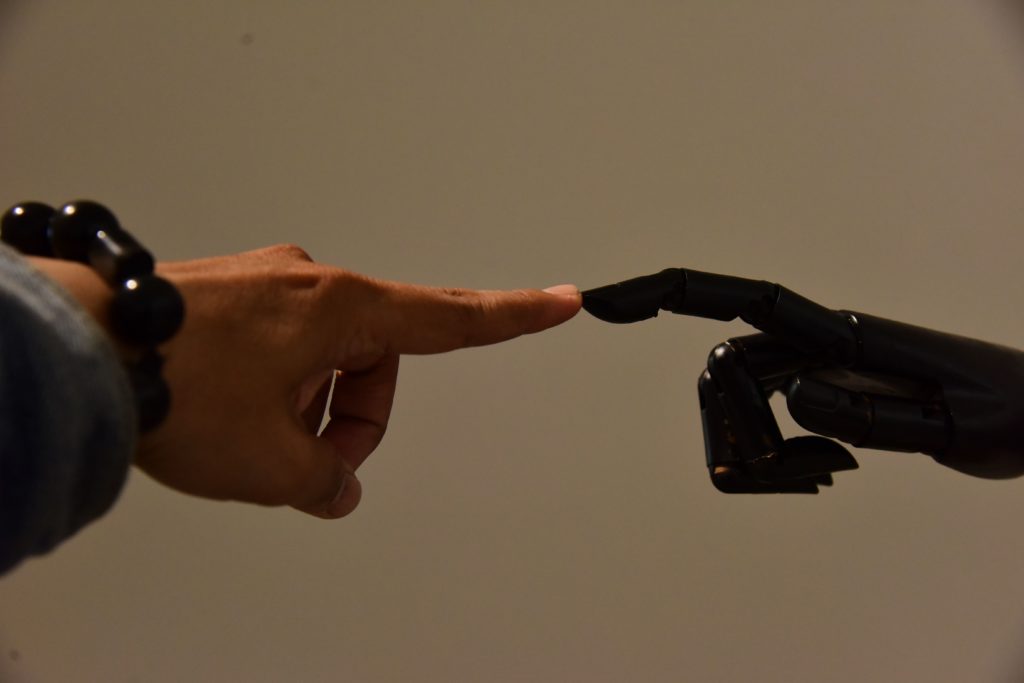
Two phrases have started showing up in the headlines that every leader should pay attention to. The first is “AI brain fry”, the cognitive exhaustion people are reporting after hours of working alongside AI tools. The second is “shadow AI”, the growing practice of employees using AI tools their organisations have not sanctioned, in ways their managers do not know about.
Both are symptoms of the same underlying problem. Organisations have rolled out AI faster than they have built the human capability to work with it well. And the gap is starting to cost them, in ways that are not always easy to see on a dashboard.
What is actually happening
Most of the conversation about AI in organisations has focused on the technology itself. Which tools to buy. Which workflows to automate. Which tasks to offload. What has received far less attention is what happens to the humans on the other side of the screen.
Research is starting to show a clear pattern. People who spend long stretches working with generative AI experience a specific kind of mental fatigue that is different from regular cognitive load. They describe it as feeling hollowed out, losing their sense of what they actually think, and finding it harder to trust their own judgement. That is what has been labelled AI brain fry.
At the same time, a different problem is playing out in parallel. People are using AI anyway, with or without permission. Estimates suggest that more than half of knowledge workers are using unsanctioned AI tools for work tasks. They do it because the tools help them. And they hide it because the culture has not caught up.
Both problems are, at their root, human problems. Not technology problems. And they require human skills to solve.
Why this matters now
Organisations are at a tipping point with AI. The technology is powerful enough to reshape how work gets done, but the human capability to guide that shift is lagging behind. When capability lags, three things happen.
The first is that the benefits of AI get diluted. People use the tools in shallow ways, accept the first output they see, and lose the critical thinking that would have made the work genuinely better. The productivity gain that looked so obvious in a pilot disappears somewhere in the day to day.
The second is that trust erodes. Teams start to suspect that AI is being used to replace judgement rather than enhance it. Leaders lose confidence in the quality of what is being produced. Individuals feel their own value being quietly eroded. None of these are easy to name in a meeting, but they show up as disengagement and hesitation.
The third is that shadow AI culture takes hold. When people feel they cannot talk openly about how they are using AI, they stop sharing what they are learning. The organisation loses the chance to build collective intelligence from its own experience. And the gap between sanctioned policy and actual practice grows quietly wider every week.
What people often get wrong
The most common response to AI brain fry is to treat it as a tooling problem. “We need better prompts. We need a different platform. We need more training on the tool.” This misses the point. AI brain fry is not caused by bad tools. It is caused by a missing capability. People have not been taught how to stay cognitively grounded while collaborating with a machine that generates plausible answers on demand.
The most common response to shadow AI is to clamp down. Block the tools. Write a policy. Run an audit. This also misses the point. Shadow AI is a signal that your organisation has not yet built a culture where people feel safe to experiment openly. Banning the tools does not remove the need. It just pushes the behaviour further underground.
In both cases, the real work is not about technology or policy. It is about building the human skills that make good collaboration with AI possible: the ability to reflect, to test assumptions, to ask sharper questions, to hold your own perspective while being open to another, and to know when to lean on the tool and when to step back from it.
What the better response looks like
Organisations that are navigating this well are doing something different. They are investing in a specific set of human skills that enable healthy, productive collaboration with AI.
We think of these as meta skills. They are not about using a particular AI tool. They are about how you show up when you are working alongside one. And they map directly to capabilities that already exist in the i2 skills framework, developed through more than a decade of academic research.
Scientific reasoning. The ability to treat AI outputs as hypotheses, not conclusions. To test them against reality rather than accept them because they sound confident. To notice when you are being steered toward an answer that feels too easy.
Reflection. The ability to step back and notice what the AI is doing to your own thinking. To catch yourself accepting something because it is fast rather than because it is good. To build in moments of genuine thought rather than letting a stream of AI output fill every gap.
Opportunity seeking. The ability to explore what AI could help with, and what it should not. To resist the pull of “let the AI do it” when the task actually requires human judgement. To see where the tool adds value and where it quietly subtracts something important.
Relationship skills. The ability to talk openly with your team about how AI is being used. To share what is working, what is not, and what feels uncertain. To make the shadow visible so it can stop being shadow.
Presencing. The ability to stay grounded in your own thinking and values while working with a technology that produces convincing content at speed. To notice when you are drifting into passive consumption. To bring yourself back.
These are not new skills. They are the skills that have always distinguished people who think well. What is new is that they have become essential in a way that was not true five years ago.
Practical implications
If you are leading a team, running an L&D function, or shaping organisational strategy, there are a few concrete shifts worth considering.
Make human-AI collaboration a named capability. Not a compliance topic. Not a tool training. A skill set. When something is named, it becomes possible to develop, measure, and talk about honestly.
Create space for open conversations about AI use. If your people are using AI in ways you do not know about, that is not a disciplinary problem. That is a cultural signal. Invite it into the open. Ask what is working. Share what you have learned. Normalise experimentation within thoughtful boundaries.
Build reflection into the rhythm of AI enabled work. A five minute pause at the end of a task to ask “what did the AI contribute? What did I add? What would I do differently next time?” is not productivity theatre. It is what prevents AI brain fry and builds judgement over time.
Assess where your people actually are. Self reporting on AI capability is unreliable. People overestimate how critically they engage with AI outputs. A validated behavioural assessment gives you a clearer picture of where the skills gaps actually sit.
Invest in the meta skills, not just the tools. Your tool budget will keep growing. So will your frustration if the human capability does not grow alongside it. The two need to move together.
A scenario to consider
A marketing team at a mid sized company rolled out a generative AI platform to speed up content production. For the first month, everyone was excited. Output volume doubled. Then something started to shift.
Team members reported feeling drained. The quality of their work, measured by actual engagement rather than word count, started to dip. A couple of people quietly admitted they had stopped reading what they were producing, because the AI did the first draft and they just nudged it until it looked acceptable.
When the team stepped back to examine what was happening, they realised the issue was not the platform. It was that they had stopped practising the skills that used to make their work good: asking sharper questions before writing, reflecting on whether the first idea was the best idea, testing their assumptions about the audience.
They did not turn the AI off. They added something back in. A ten minute reflection at the end of each project. A monthly review of how the team was using AI and what they were noticing about their own thinking. A shared language, borrowed from the i2 skills framework, for talking about the behaviours they wanted to strengthen.
Six months in, output was still higher than before AI. But so was engagement, confidence, and the team’s own sense of the quality of their work. The AI was doing more. But so were they.
Your AI fatigue score
Before the headlines and the strategies and the tool audits, the most important place to start is with your own behaviour. The self check below gives you a quick read on where your AI fatigue risk sits right now, and how exposed you are to the auto-pilot acceptance and cognitive drift that make AI collaboration exhausting instead of useful. It is not a full assessment, only a starting point.